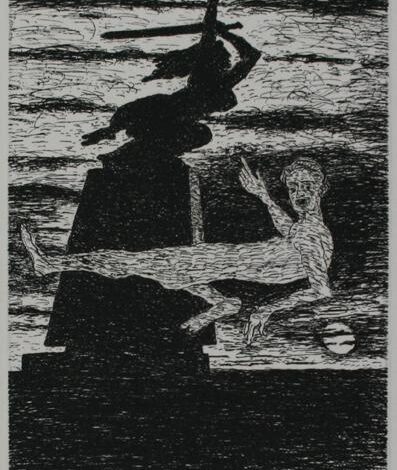
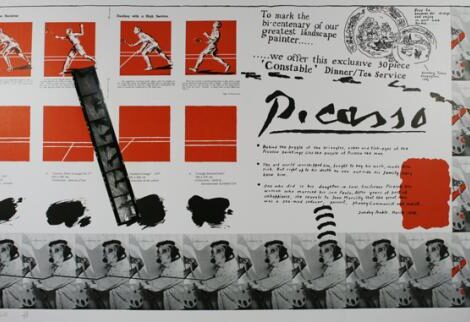
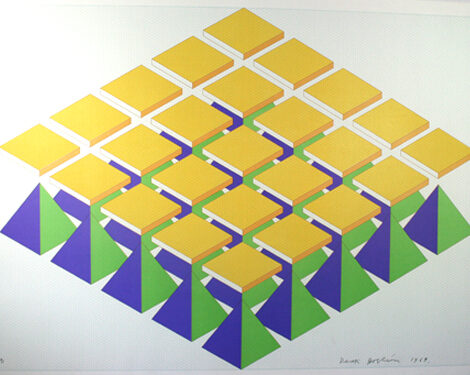
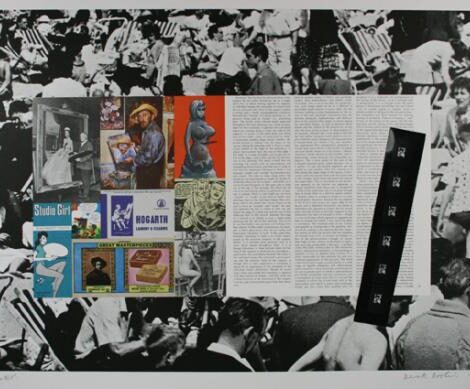
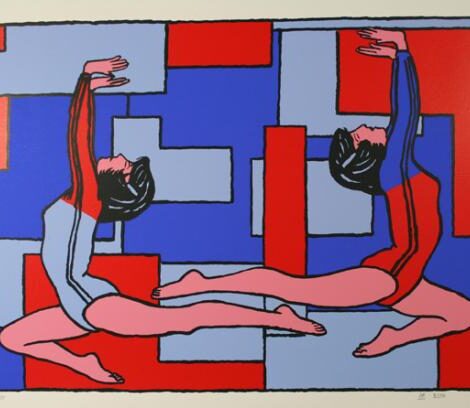
Derek Boshier (1937–2024) was a British artist whose work played a formative role in the development of Pop Art. Born in Portsmouth, Boshier grew up in the years following World War II, an experience that shaped his lifelong interest in politics, power, and the social effects of mass media. He studied at the Royal College of Art in London from 1959 to 1962, where he was a contemporary of David Hockney, Allen Jones, and R.B. Kitaj—artists who would later be associated with the rise of British Pop.
Boshier first gained international attention in the early 1960s through his inclusion in landmark exhibitions such as Young Contemporaries (1961) and Pop Goes the Easel (1961). Unlike American Pop artists who often celebrated consumer culture, Boshier approached popular imagery critically. His early paintings used bold graphics, flat color, and text drawn from advertising, patriotism, and corporate branding, but they frequently questioned nationalism, authority, and the seductive power of images. Works such as Special K and Britain Today exemplify his sharp, ironic take on British identity.
In 1966, Boshier moved to Los Angeles after receiving a teaching position at UCLA. The relocation profoundly influenced his work, exposing him to American media culture, the entertainment industry, and countercultural politics. While in the United States, he expanded his practice beyond painting to include photography, collage, design, and album covers—most notably for musicians such as The Clash and David Bowie. His interest in collaboration and cross-disciplinary work set him apart from many of his peers.
Throughout his career, Boshier remained committed to art as a critical tool rather than a decorative product. His later works revisited themes of surveillance, globalization, and environmental anxiety, demonstrating a sustained engagement with contemporary issues.
Derek Boshier’s legacy lies in his refusal to be neatly categorized. Though closely associated with Pop Art, his work consistently challenged its assumptions, combining visual wit with political awareness. He is remembered as both a pioneering artist and an influential educator who encouraged generations of artists to think critically about images and the world they shape.