Prunella Clough (1919–1999) was a major British painter whose work played a quiet but decisive role in the development of post-war abstraction in Britain. Born in London, she grew up in an environment that encouraged intellectual independence, something that would later be reflected in both her art and her famously private way of life. She trained at the Chelsea School of Art during the late 1930s, where she received a rigorous grounding in drawing and painting while absorbing modernist ideas circulating in Britain at the time.
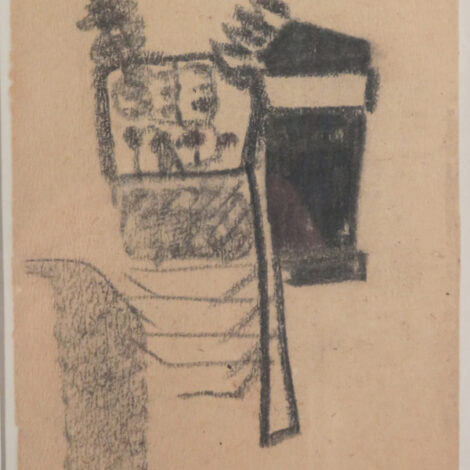
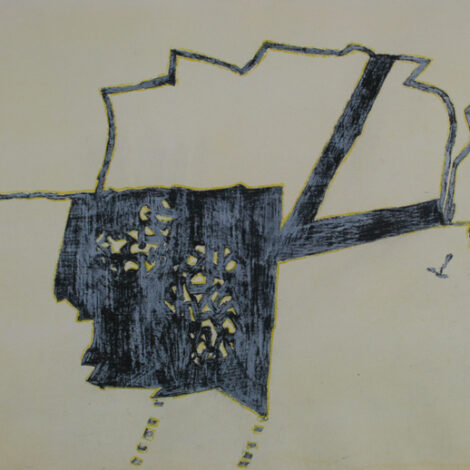
Clough’s early work was figurative and often focused on working people and industrial settings—particularly dockworkers, factories, and urban labour. Even in these paintings, however, she showed less interest in narrative of the picture than in structure, space and surface of the paint. During the 1950s and 1960s her work shifted decisively toward abstraction, though it never became purely non-referential. Instead, Clough developed her own distinctive visual language rooted in close observation of the material world: machinery, building sites, packaging, fabric, masks, and later, the overlooked debris of everyday life.
What set Clough apart was her ability to extract abstract form from ordinary objects without stripping them of their physical presence. Her paintings often hover between recognition and ambiguity, inviting the viewer to sense the source without fully identifying it. She favored muted, carefully modulated color and complex, layered compositions that reward slow looking.
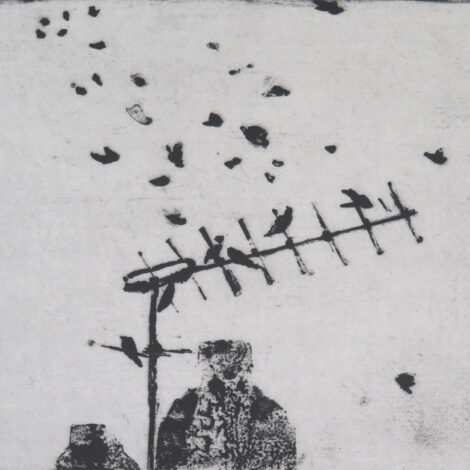
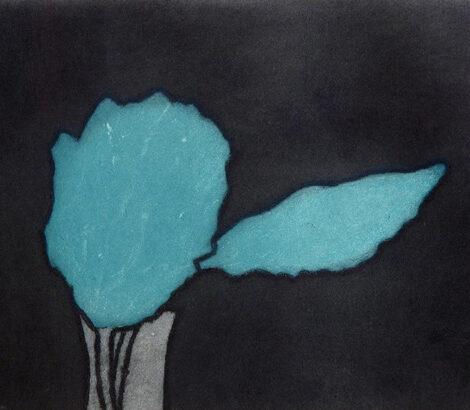
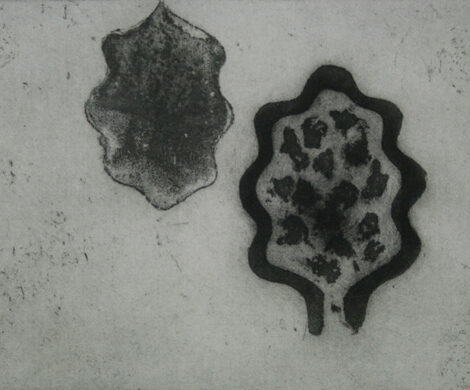
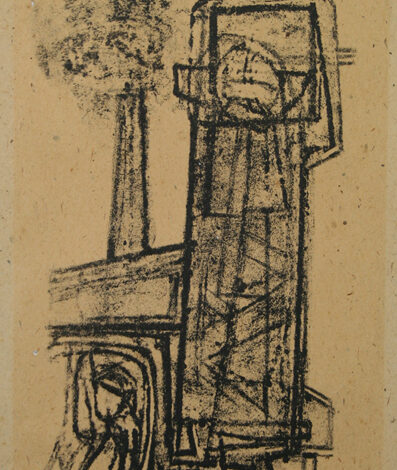
Although Clough avoided publicity and lived a relatively reclusive life, she was highly respected by fellow artists and critics. She taught for many years at Wimbledon School of Art and her influence was felt particularly among younger painters who admired her intellectual seriousness and resistance to fashion. She enjoyed the collaboration that print-making offered and her prints – mostly very small edition numbers – play an important part of her output. Clough exhibited regularly in Britain and internationally, and her work is in major public collections, including the Tate.
She continued working almost until her death in 1999. Today, Prunella Clough is recognized as one of the most important British painters of the twentieth century—an artist whose quiet originality and sustained commitment to abstraction left a lasting mark on modern art.